

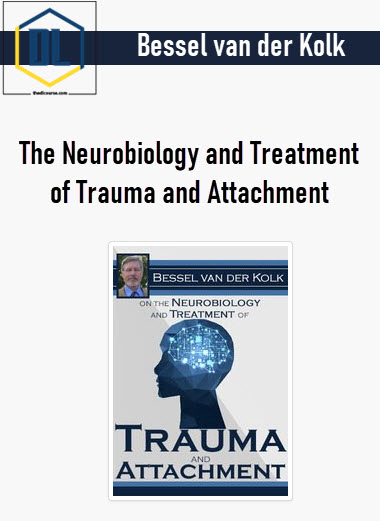
Bessel van der Kolk – The Neurobiology and Treatment of Trauma and Attachment
Original price was: $439.99.$49.00Current price is: $49.00.
Bessel van der Kolk – The Neurobiology and Treatment of Trauma and Attachment
Description of The Neurobiology and Treatment of Trauma and Attachment
Dr. Bessel van der Kolk, renowned trauma expert and NY Times bestselling author of The Body Keeps the Score, shares the latest research and advancements in brain science, attachment and trauma treatments in this in-depth seminar recording.
Based on groundbreaking research and clinical practice, Dr. van der Kolk reveals both the science and art of today’s most effective pathways to healing posttraumatic stress and working with disorganized attachment in complex trauma.
You’ll return to your clinical work with new knowledge of the impact of trauma on the brain and nervous system, along with mind-body treatment approaches that can rewire the trauma response and help your clients reclaim their lives.
Don’t miss this opportunity to advance your practice with the latest trauma treatment research, insight and interventions.
Objectives
- Appraise the applicability of trauma research in order to ascertain its clinical implications.
- Present an overview of the impact of trauma on the various parts of the brain, body and nervous system.
- Differentiate the symptomology and treatment of trauma versus working with disorganized attachment in your clinical practice.
- Evaluate the use of the DSM-5® in the diagnosis and treatment of trauma-related disorders.
- Analyze the effectiveness of psychopharmacology, evidence-based protocols, and body-oriented therapies in the treatment of trauma.
- Consider the long-term consequences and comorbidities of adverse childhood experiences and disorganized attachment.
- Communicate the frequent challenges for children with complex trauma such as affect dysregulation, impulse control and risk taking.
- Articulate ways to restore proper balance between the rational and emotional brains, that can help clients re-establish ownership of their bodies and minds.
- Evaluate treatment interventions for disorganized attachment that target emotion regulation and self-leadership.
- Assess the effectiveness of EMDR to access, tolerate and process memories in the treatment of distinct trauma.
- Explore methods that re-establish connection and synchrony with others to overcome trauma.
- Teach clients self-care and self-compassion practices to build self-leadership and an internal locus of control.
Outline
Trauma and Neuroscience
- Neurobiology of Traumatic Stress
- What Happens in the Mind, Brain and Body
- The Anatomy of Survival
- The Loss of Self and Instinct of Purpose
Diagnosis and Treatment of Trauma and Attachment Disorders
- Disorganized Attachment vs. Traumatic Stress
- DSM-5® Implications for assessment, Diagnosis and Treatment
- Psychopharmacology, Treatment Protocols & Body-Oriented Interventions
Early Brain Development and Attachment
- Interpersonal Neurobiology
- Synchrony and Attunement
- Disorganized Attachment
- Complex Trauma in Children
- Developmental Trauma Disorder
- Adverse Childhood Experiences (ACES) & Long-Term Implications
Pathways to Healing
- EMDR
- Synchrony and Community
- Language
- Affect Regulation
Readmore about: Bessel van der Kolk
Related products
Instant Delivery
Jane Yakel – Innovations in Dementia Rehab: A Multidisciplinary Guide to Staging & Interventions
Instant Delivery

Instant Delivery
Instant Delivery
Ten Best-Ever Anxiety Treatment Techniques – Margaret Wehrenberg

Instant Delivery
Instant Delivery