



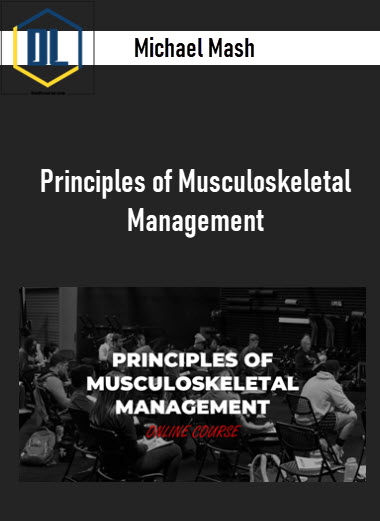
Michael Mash – Principles of Musculoskeletal Management
Original price was: $999.00.$193.00Current price is: $193.00.
Delivery: Instant Delivery
Michael Mash – Principles of Musculoskeletal Management
Enhance your musculoskeletal knowledge and apply it to treating barbell athletes through an evidence-based biopsychosocial lens.
What’s Included
- 133 Videos
Totaling 18 hours of content. Watch at your own pace. Start and stop whenever you want. - Watch on any device
With an easy user interface for mobile, desktop, or tablet. Lifetime access. - A Follow Along PDF Manual
To help solidify the concept and enhance your understanding - Earn a certificate of completion
Pass a quiz at the end of each module and get CEUs!
What You’ll Learn In Principles of Musculoskeletal Management
Patient Evaluation and Pain Science Principles
We kick off the course by discussing our evaluation framework. This covers subjective questions to guide objective exam, how to rule out sinister pathology, rule in/out competing potential regions of contribution, relevant objective testing in light of the subjective exam, and communicating findings and treatment targets. We then go through a literature review on pain neuroscience education and teach you how to implement these principles into practice.
All About Chronic Low Back Pain
Next, we will dig into evaluating and treating chronic low back pain, incorporating the latest evidence of modern pain neuroscience and how it applies to working with barbell athletes in pain. We examine behavior change and healthy lifestyle factors that may assist in mediating successful outcomes and explore graded exercise and pacing strategies to facilitate tolerance to meaningful activities based on patient’s goals. Putting it all together, we discuss modifiable factors for the bench, overhead press, squat, and deadlift for patients with chronic low back pain.
Acute Low Back Pain and Back-Related Leg Pain
Let’s talk about managing acute low back pain. In this module, we explore prevalence, prognosis, guidelines across the globe, disc and nerve pathomechanics, screening for red flags, interventions and self management strategies. We then cover modifiable factors for the bench, overhead press, squat, and deadlift, providing guidelines for helping barbell athletes optimally navigate this situation.
Managing Neck Pain and Neck-Related Arm Pain
Next up is neck pain. We examine the role of symptom modification, mechanisms at play, neurodynamics, radiculopathy, and how to manage neck & arm pain in barbell athletes as well as unpacking unique factors that apply to our 4-Step Framework for Training with Pain. We will unpack modifiable factors for the bench, overhead press, squat and deadlift.
Comprehensive Management of Shoulder Pain
Now onto the shoulder. We highlight common presentations (stiff, weak, and mobile shoulders) and how they may manifest in barbell athletes as well as unpack unique factors that apply to each. We explore prevalence, prognosis, guidelines across the globe, interventions and self management strategies, and how this will influence our modifiable factors for the bench, overhead press, squat and deadlift.
Tendinopathy and Principles of Workload Management
Let’s talk about all things tendinopathy. Clinicians will learn a brief historical perspective of tendinopathy etiology/management, diagnostic/prognostic considerations, the current evidence base for commonly used exercise/non-exercise interventions, and practical recommendations for strength training modifications in the presence of tendinopathy. Special considerations for return to plyometric loads/training and in-season management of tendinopathy, among others, will be discussed. Workload management principles/frameworks will be discussed alongside pertinent research.
Femoroacetabular Impingement and Hip Labral Pathology
Femoroacetabular impingement (FAI) syndrome and symptomatic labral pathology are common diagnoses related to non-arthritic hip pain, especially in athletes with significant rotational sporting loads. Clinicians will learn the base-rates of these imaging findings in different populations, diagnostic/prognostic considerations, the current evidence base for commonly used exercise/non-exercise interventions, and practical recommendations for strength training modifications in the presence of FAI syndrome or symptomatic labral pathology. Special considerations for reconditioning/return to sport and post-surgical management following debridement and/or labral repair, among others, will be discussed.
Managing Anterior Cruciate Ligament (ACL) Injuries
Injury to the anterior cruciate ligament (ACL) of the knee is relatively common in athletes, with subsequent reconstruction (ACLR) being the most common management strategy. Rehabilitation quality for athletes returning to sport following ACL reconstruction is often lacking at early, mid, and late timepoints. In this module, clinicians will learn about the etiology of ACL injuries, management priorities during the early, middle, and late phases following ACLR; and practical recommendations for strength training modifications during each phase of ACLR. Special considerations for reconditioning/return to sport and conservative management of ACL injuries, among others, will be discussed.
More courses from the same author: Michael Mash
Related products

Instant Delivery
Total sold: 2

Health & Lifestyle
Donna Eden with David Feinstein – The Energies of Love: The Invisible Key to Fulfilling Relationship
Total sold: 1

Instant Delivery
Health & Lifestyle

Health & Lifestyle

Health & Lifestyle
Christian Thibaudeau – Neurotype 1B Strength & Power program
Total sold: 1
Health & Lifestyle
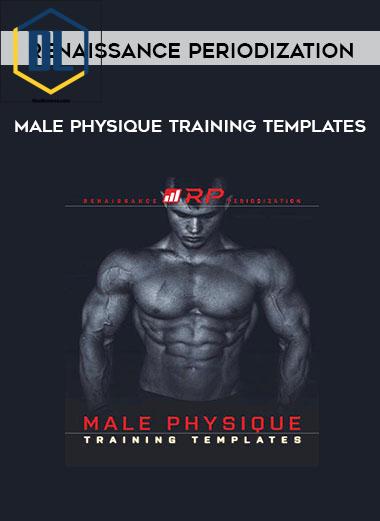
Renaissance Periodization – “Male Physique Training Templates”
Health & Lifestyle