-
×
 B The Trader – Trading Course
2 × $20.00
B The Trader – Trading Course
2 × $20.00 -
×
 Nathaniel Branden – Bask Principles Of Objethrism
1 × $15.00
Nathaniel Branden – Bask Principles Of Objethrism
1 × $15.00 -
×
 Richard Bandler – Ericksonian Hypnosis – An NLP Perspective
1 × $27.00
Richard Bandler – Ericksonian Hypnosis – An NLP Perspective
1 × $27.00 -
×
 Selena Soo – Get Known and Get Clients
1 × $48.00
Selena Soo – Get Known and Get Clients
1 × $48.00 -
×
 Charles Floate – OnPage Mastery
1 × $31.00
Charles Floate – OnPage Mastery
1 × $31.00 -
×
 Jeff Barson – The Ultimate Clinic Operations Blueprint
1 × $92.00
Jeff Barson – The Ultimate Clinic Operations Blueprint
1 × $92.00 -
×
 Gemma Bonham-Carter – The Passive Project
4 × $9.00
Gemma Bonham-Carter – The Passive Project
4 × $9.00 -
×
 Nehemiah Davis – How to start your own event space in the next 3-6 months
1 × $297.00
Nehemiah Davis – How to start your own event space in the next 3-6 months
1 × $297.00 -
×
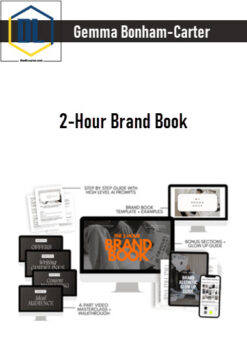 Gemma Bonham-Carter – 2-Hour Brand Book
1 × $9.00
Gemma Bonham-Carter – 2-Hour Brand Book
1 × $9.00 -
×
 Just for Traders – Options Buying Course
1 × $9.00
Just for Traders – Options Buying Course
1 × $9.00 -
×
 Daniel McEvoy – Dans Bull Run Millions Crypto Course
1 × $40.00
Daniel McEvoy – Dans Bull Run Millions Crypto Course
1 × $40.00 -
×
 Robert Jacobs – Hypnotic Seduction
1 × $9.00
Robert Jacobs – Hypnotic Seduction
1 × $9.00 -
×
 Kenrick Cleveland – Unconscious Neuro Modelling (Unified and Complete)
1 × $9.00
Kenrick Cleveland – Unconscious Neuro Modelling (Unified and Complete)
1 × $9.00 -
×
 Ross Jeffries – Ultimate Language Pattern Collection
1 × $37.00
Ross Jeffries – Ultimate Language Pattern Collection
1 × $37.00 -
×
 Jeff Goins – Effective E-mail and Newsletter Marketing
1 × $9.00
Jeff Goins – Effective E-mail and Newsletter Marketing
1 × $9.00 -
×
 The Landshark Method
1 × $9.00
The Landshark Method
1 × $9.00 -
×
 DAN BACON – Alpha Male Power
1 × $45.00
DAN BACON – Alpha Male Power
1 × $45.00 -
×
 All Products Special (Business Explained)
1 × $87.00
All Products Special (Business Explained)
1 × $87.00 -
×
 BRYAN KREUZBERGER – BREAKTHROUGH EMAIL
1 × $9.00
BRYAN KREUZBERGER – BREAKTHROUGH EMAIL
1 × $9.00 -
×
 Internal Family Systems Therapy (IFS): 2-Day Experiential Workshop – Richard C. Schwartz
1 × $59.00
Internal Family Systems Therapy (IFS): 2-Day Experiential Workshop – Richard C. Schwartz
1 × $59.00 -
×
 RROP – Low Timeframe Supply & Demand
1 × $9.00
RROP – Low Timeframe Supply & Demand
1 × $9.00 -
×
 Alicia Streger – 28-Day Transformation Challenge
1 × $25.00
Alicia Streger – 28-Day Transformation Challenge
1 × $25.00 -
×
 Taylin Simmonds – Micro-Writer System (AI Companion)
1 × $9.00
Taylin Simmonds – Micro-Writer System (AI Companion)
1 × $9.00 -
×
 Stratagem Trading – Unbalanced Birds
1 × $239.00
Stratagem Trading – Unbalanced Birds
1 × $239.00 -
×
 60 Years of Challenge – Total Seduction
1 × $61.00
60 Years of Challenge – Total Seduction
1 × $61.00 -
×
 Jerry Sargeant – Introductory Healing Training
1 × $10.00
Jerry Sargeant – Introductory Healing Training
1 × $10.00 -
×
 Renaissance Periodization – “Male Physique Training Templates”
1 × $37.00
Renaissance Periodization – “Male Physique Training Templates”
1 × $37.00 -
×
 Derek Rake – Shogun Sequences Handbook Volume 2
1 × $19.00
Derek Rake – Shogun Sequences Handbook Volume 2
1 × $19.00 -
×
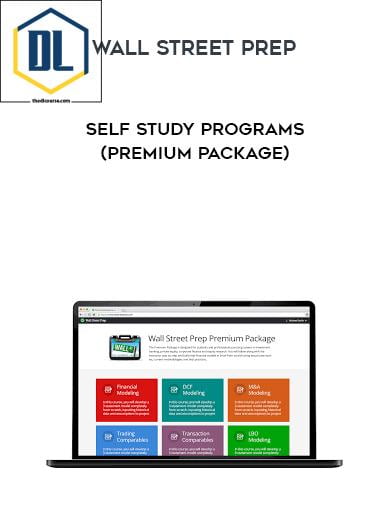 Wall Street Prep – Self Study Programs (Premium Package)
1 × $57.00
Wall Street Prep – Self Study Programs (Premium Package)
1 × $57.00 -
×
 The Manifestation Babe Academy 2021
1 × $167.00
The Manifestation Babe Academy 2021
1 × $167.00 -
×
 Austin Lovell – Freedom Fast Track
1 × $9.00
Austin Lovell – Freedom Fast Track
1 × $9.00 -
×
 Jon Benson – VSL Fast Track 2018
1 × $48.00
Jon Benson – VSL Fast Track 2018
1 × $48.00 -
×
 Riley Bennett – Upwork Secrets 2.0
1 × $9.00
Riley Bennett – Upwork Secrets 2.0
1 × $9.00 -
×
 Billy Gene – 5 Day AI Crash Course for Marketers
1 × $35.00
Billy Gene – 5 Day AI Crash Course for Marketers
1 × $35.00 -
×
 Taylor Jackson – Creating Profitable YouTube Videos
1 × $20.00
Taylor Jackson – Creating Profitable YouTube Videos
1 × $20.00 -
×
 Regan Hillyer – 7 Days To A Kick Ass New You
1 × $122.00
Regan Hillyer – 7 Days To A Kick Ass New You
1 × $122.00 -
×
 Liana Ling – Bullet Proof Meta (Facebook) Ads
1 × $9.00
Liana Ling – Bullet Proof Meta (Facebook) Ads
1 × $9.00 -
×
 Lee Holden – Acupressure Facelift & Rejuvenation Qi Gong Workshop
1 × $39.00
Lee Holden – Acupressure Facelift & Rejuvenation Qi Gong Workshop
1 × $39.00 -
×
 Kelly Felix – Underestimated
1 × $9.00
Kelly Felix – Underestimated
1 × $9.00 -
×
 Apteros Trading – Learn to Scalp
1 × $79.00
Apteros Trading – Learn to Scalp
1 × $79.00 -
×
 Digital Resell Vault – Clone To Content
1 × $25.00
Digital Resell Vault – Clone To Content
1 × $25.00 -
×
 Chase Reiner – AI Profits
1 × $9.00
Chase Reiner – AI Profits
1 × $9.00 -
×
 Gabriel Guerrero – Explorando Metaforas Hipnoticas
1 × $29.90
Gabriel Guerrero – Explorando Metaforas Hipnoticas
1 × $29.90


Buy With Coupon: DLC25 (-25%)
Jonathan Altfeld – Knowledge Engineering
$19.90
Product Delivery : Instant Deliver
Description
Jonathan Altfeld – Knowledge Engineering
Salepage : Jonathan Altfeld – Knowledge Engineering

Model other people’s Belief & Decision Systems with More Depth, Breadth & Accuracy than you would believe today, and help you to Intuitively Identify ways to Optimize those Systems.
Dear Advanced NLP Student & Modeling Enthusiast,
Jonathan Altfeld here.
Before I founded the Mastery InSight Institute, and before I immersed myself in Neuro-Linguistic Programming, I was a professional in the field of Artificial Intelligence. I did expertise-modeling professionally, almost exclusively for Fortune 500 companies. I was paid to interview business experts, find out what they knew, how they knew it, how they made the decisions they made, and then build software systems to reproduce those experts’ decision making processes.
I can just hear some of you thinking… “What? You mean the field of NLP doesn’t hold the only claim to modeling expertise? Blasphemy!”
The field of Knowledge Engineering closely parallels some of the skills taught through NLP. There are obvious differences, but certainly at the core of what constitutes the NLP technology & skillset is a set of tools to model human knowledge & subjectivity. That very description would sound highly familiar to those who do professional Knowledge Engineering. In many ways they are two parallel fields.
Knowledge Engineering is about building software systems to behave & ‘think’ like human experts. In such a project, core software development team members would be tasked with acquiring knowledge from the experts, and then encoding that knowledge in a fashion that allows computers to reproduce the expert’s behavior consistently and fast! We can list more “similarities” between these two approaches to modeling than we can “differences.” But rest assured, both exist.
The Knowledge Engineer (KE) spends time interviewing & studying the experts, and learning directly from them. There are a variety of different methods which can be used to accomplish this, all grouped loosely under the term “Knowledge Acquisition.” Once a sufficient initial knowledge-base of modeled knowledge has been amassed, the KE then determines ways of storing/structuring/representing the expert’s knowledge, and then proceeds to build a software application known as an expert system.
NLP practitioners & master practitioners may recognize the above process as being highly similar to what is known as Modeling in NLP. This goes beyond strategy elicitation and is used to logically reproduce behavior in a given domain of expertise. Occasionally we hear people thinking of ‘reproducing a tennis swing’ or ‘matching/mirroring’ someone else’s behavior as ‘modeling.’ It isn’t, don’t let them oversimplify things. If they’re suggesting such things, they categorically don’t know what modeling is.
Do not allow others who suggest that if you (for example) learn to identify when someone’s in a particular Sensory Mode (like “Visual”), that you’re modeling. Such would be an injustice to you and to the process of modeling; that example is just a bit of “strategy elicitation” on a very small scale.
One (fallible but useful) rule of thumb might be that if it takes you at least several full-time AND efficient weeks or months, to acquire an area of expertise, then maybe you’re modeling. If it takes months for you to acquire the knowledge, integrate it into your unconscious mind, organize & optimize it, and then use it to reproduce expert behavior, then maybe you’re modeling. If you thought learning how to create rapport with “colored mental bubbles” was modeling, think again.
It ain’t. At best that’s strategy elicitation. I once watched a trainer step into an “expert circle,” in which he said he imagined all the skills he wanted (but hadn’t actually elicited) into that circle, and he could feel what it was like to be the expert. As though if he said he was modeling a surgeon I would let him within a 3 mile distance of my friends or family needing medical assistance.
Give me a break!!! Modeling gets a “bad rap”
because of distortions & examples like that.
The question then becomes, would REAL modeling skills actually be useful to you?
So let’s look at some examples of real models at work.
Have you heard of the “Mega-Math” or “Mega-Memory” courses often advertised on television, as collections of genius strategies in particular areas of skill (math & memory skills)? Kevin Trudeau made a boatload of money from sales of these (& other related) courses.
Most of the “Real Estate” home-study-courses advertised through infomercials are examples of people who modeled their own skill (or someone else’s) at acquiring real estate with no-money-down. Someone helped them package that model in a way that makes it easy to learn.
The website http://www.sportsmind.com.au is an example of an NLP-trained person who modeled sports performance optimization, and now trains those skills to facilitators of his system. The “Persuasion Tactics Power Summit” course (& home-study package) was a Persuasion Tactics ‘model’ acquired by myself, from someone who is naturally a very persuasive individual, named Chris Tomasulo.
Find out for yourself what the CD’s in the course sound like.
Readmore about : Jonathan Altfeld – Knowledge Engineering
Delivery Policy
When will I receive my course?
You will receive a link to download your course immediately or within 1 to 21 days. It depends on the product you buy, so please read the short description of the product carefully before making a purchase.
How is my course delivered?
We share courses through Google Drive, so once your order is complete, you'll receive an invitation to view the course in your email.
To avoid any delay in delivery, please provide a Google mail and enter your email address correctly in the Checkout Page.
In case you submit a wrong email address, please contact us to resend the course to the correct email.
How do I check status of my order?
Please log in to TheDLCourse account then go to Order Page. You will find all your orders includes number, date, status and total price.
If the status is Processing: Your course is being uploaded. Please be patient and wait for us to complete your order. If your order has multiple courses and one of them has not been updated with the download link, the status of the order is also Processing.
If the status is Completed: Your course is ready for immediate download. Click "VIEW" to view details and download the course.
Where can I find my course?
Once your order is complete, a link to download the course will automatically be sent to your email.
You can also get the download link by logging into your TheDLCourse account then going to Downloads Page.
Related products
-69%

Original price was: $87.00.$27.00Current price is: $27.00.
-99%
Original price was: $6,905.00.$97.00Current price is: $97.00.
-97%
Original price was: $297.00.$9.00Current price is: $9.00.
-66%

Original price was: $97.00.$33.00Current price is: $33.00.
-85%

Original price was: $447.00.$69.00Current price is: $69.00.
-55%

Original price was: $65.00.$29.00Current price is: $29.00.